Build the machine-readable model of the physical economy. Then build the agents that operate it.
Capveon is AI for infrastructure contractors and manufacturers: it connects the systems they run and does the work between them. That is the wedge. The same system applies to every regulated, physical industry.
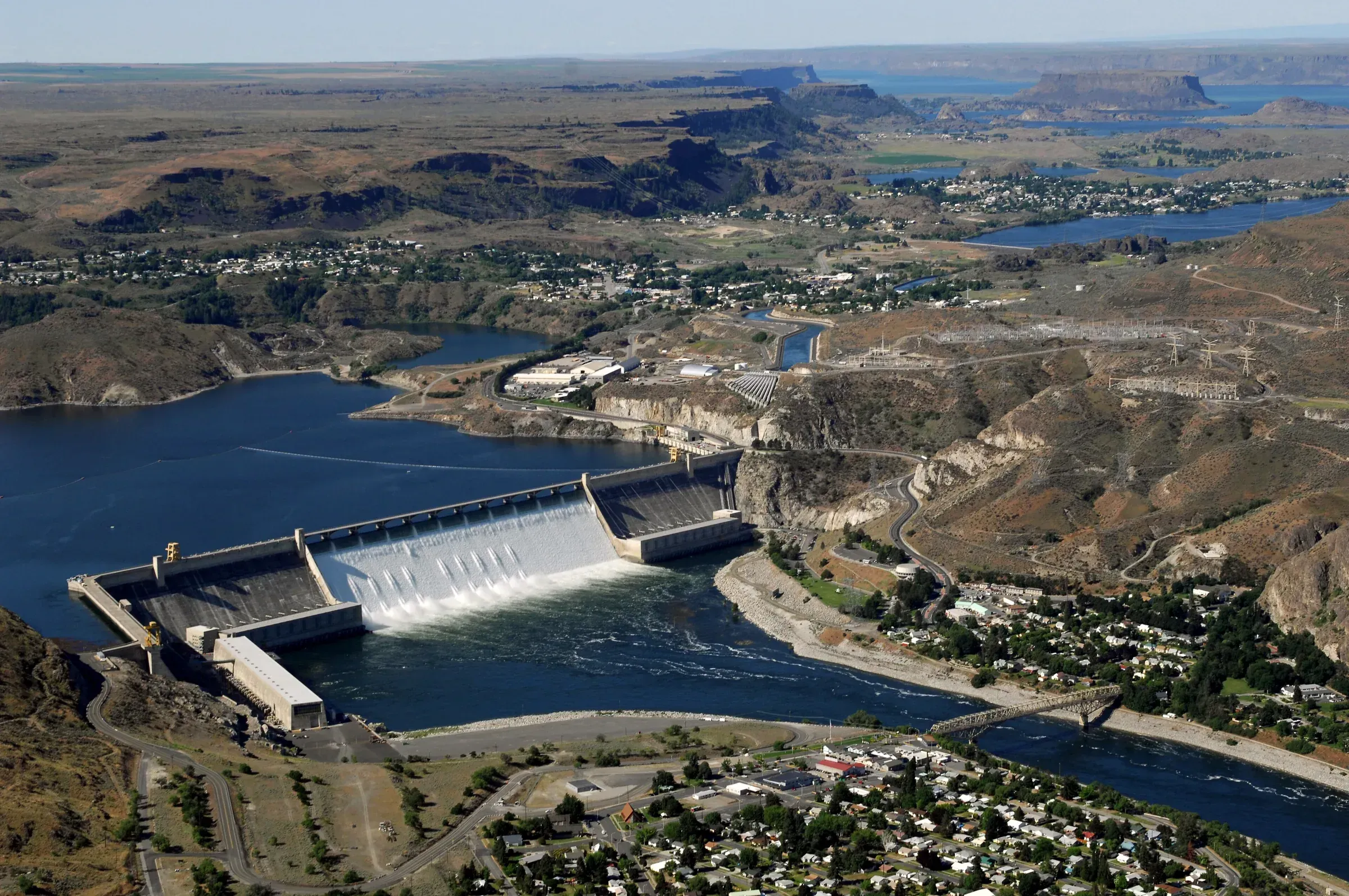
Grand Coulee Dam from the air, Columbia River, Washington. Bureau of Reclamation.
The thesis
Regulated industries generate more information than almost any other part of the economy, and almost none of it is connected. A water contractor runs a CRM, an ERP, an estimating system, a project system, a shared drive and an inbox, and buys lead feeds on top. Government publishes every plan, budget, solicitation, specification and award. None of it agrees, none of it shares an identifier, and the business runs on people moving information between the pieces.
Software has not fixed this because each vendor owns one piece and each piece is different at every company. What changed is that a system can now read the documents and use the systems the way a person would. That makes it possible to sit on top of all of them, unify the operation's data without a migration, and build automation and prediction on the result.
Most software solves one workflow. Capveon is deliberately general.
The wedge
Infrastructure contractors and manufacturers, sold on concrete workflows.
Contractors and manufacturers in water, wastewater, heavy civil and utility work have meaningful scale, several systems each, and people spending most of their week on research and data entry. They buy a workflow that saves hours this month. Once their systems are connected, the second workflow is configuration and the forecasting layer is a side effect of the first two.
Private equity owns many of these companies and buys the same thing at portfolio scale: operational efficiency and margin expansion, deployed in days per company.
The loop
Public data is the distribution engine as well as a source.
- Public data
Capital plans, solicitations, procurement records, specifications, awards, agendas, funding and regulatory records, cleaned and structured.
- Research
Explainers and datasets drawn from the record, useful to anyone in the industry. They demonstrate the data, generate inbound, and give outbound something worth leading with.
- Conversations
A specific, useful observation about a company's market opens the door. Then: how do you handle this today, and what wastes the most time.
- Automation
The first workflow is built in a working session. Systems are connected. Hours come back.
- Expansion
The second workflow, the forecasting layer, the next portfolio company, the next industry.
Where it goes
The same system applies wherever an industry is regulated, data-heavy and still run by hand: water and wastewater, power and grid, transportation, telecom, industrial infrastructure. Utilities and asset owners are the next market, entered through the contractors and manufacturers they already trust.
The long-term product is the model of what exists and what is happening in the physical economy, and the agents that act on it.
Backed by Y Combinator
Capveon is a small team of engineers who have built data systems for infrastructure and government before, and who spend most weeks with the people who run these companies. We share traction, pipeline and the data room in a conversation.