Know what’s being designed, and who is designing it.
Projects in planning and design, the engineer behind each one, and what to ask them while the design can still change.
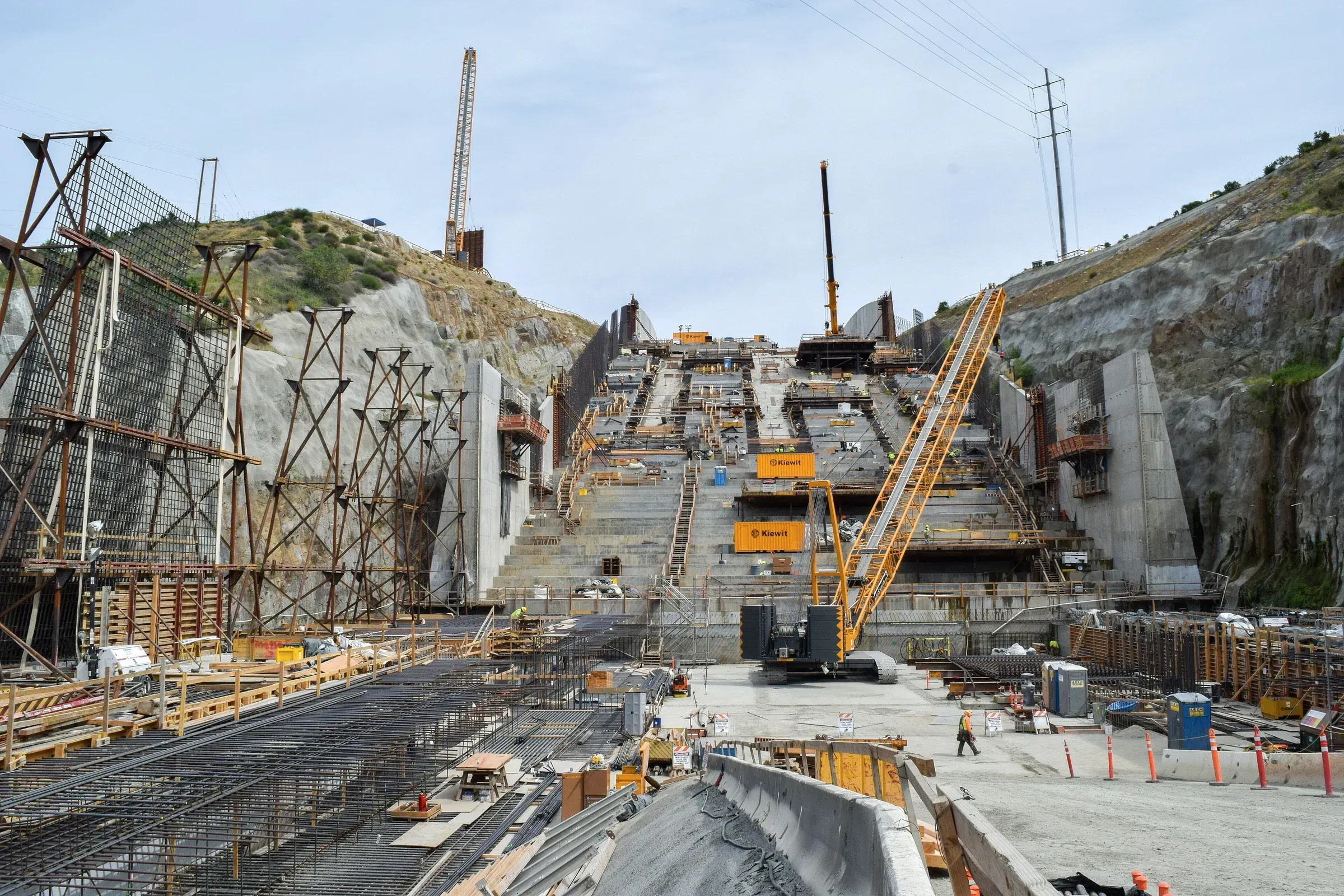
Cranes over the Folsom Dam auxiliary spillway under construction, California. U.S. Army Corps of Engineers, Sacramento District.
By the time it’s out to bid, most of it is decided.
The engineer picks the products and draws the scope long before anyone outside sees a spec. The teams who win were in the room while that happened. Knowing when to be there is buried in master plans, meeting minutes and design reports nobody has time to read.
How it runs
A person on your team approves before anything is written to a system you run.
- Notice
A master plan, an engineer hired, a design report or a project in a council agenda.
- Understand
What it is, how big, how far along the design is, and whether it is your kind of work.
- Name
The owner and the engineer behind it, from the documents themselves.
- Plan
What to ask, who to ask, and a first note drafted for you to send. Nothing goes out without you.
- Follow
Each project kept current as new documents appear, so you hear when it moves.
What it produces
Every field links to where it came from.
Waters Avenue Force Main Replacement
Hillsborough County, Florida. 60 percent design.
- Materials
- Specified in the design report, page 16.
- Equipment
- Named manufacturers, or equal. Design report, page 18.
- Budget
- $61.5M estimate against a $24M budget. Design report, page 30.
- Engineer
- Named on the drawing cover.
- Timing
- Built by late 2028. Scope of work, page 1.
Early, over budget, and the design can still change. Worth a conversation with the engineer now.
Questions
- Where does this come from?
- The public record: master plans, agendas, design contracts and design reports from cities, counties, utilities and agencies.
- Does it tell us who to call?
- It names the owner and the engineer from the documents. A person’s name and number are not always public, and when they are not, it says so.
Bring the work you’re looking at.
Thirty minutes on your own projects. We go through what each one is, whether it’s yours, and what to do next.